
How to Choose the Best Therapy for Your Child's Developmental Needs
From the moment you hold your child for the first time, you imagine a bright future for them. You guide them gently, and you hope that they will thrive and achieve great things. But sometimes, things don’t work out quite as expected—and that’s okay.
You might find that your child needs a little more support than other children, which leads you to worry. We are here to tell you that this is absolutely normal and not something you should feel anxious about.

In fact, 1 in 5 children has some kind of developmental delay. But how do you, as a parent, recognize the signs and choose the right therapy plan for your child’s development? That’s exactly what we are going to walk you through.
Signs Your Child May Benefit from Therapy
Acknowledging that your child may require therapy is the first step towards their optimal growth. Pay close attention to their behavior, mood, speech, and movement. If any of their actions or behavior is making you feel something is ‘off,’ it’s time you speak to a professional.

How Do I Understand My Child Requires Therapy?
Keeping track of child development milestones will be a huge help in recognizing developmental delay or other concerning signs.
Physical and emotional clues you should keep an eye out for:
- Emotional instability and mood swings
- Aggressive behavior and temper tantrums
- Speech delay or less speech according to age
- No social interaction and eye contact
- No name-calling response
- Movement and balance issues
- Hyperactivity and focus issues
- Regression in daily activities
If you notice a pattern in these behaviors, it’s worth having your child evaluated by a therapist or pediatric specialist.
Types of Therapy for Children’s Development
Once you have acknowledged that your kid needs therapy, the next step is choosing the correct therapy for your child. Think of therapy as the golden key that can open all locks. It is simply a means that ensures proper care for your kid’s mental and emotional well-being.
However, therapy doesn’t only address the abstract parts of your child’s life but also the very physical and elemental parts.
Your therapist might suggest plans that focus on:
- Overall emotional well-being of your kid
- Developing problem-solving skills
- Enhancing overall movement
- Building social skills
- Developing confidence
- Facing anxiety and fear

What Are the Child Therapy Options I Can Look Into?
For your clarity, let’s take a look at the therapy options available. Being familiar with the types of therapy can help you gain a better understanding and lead to a fruitful conversation with your therapist.
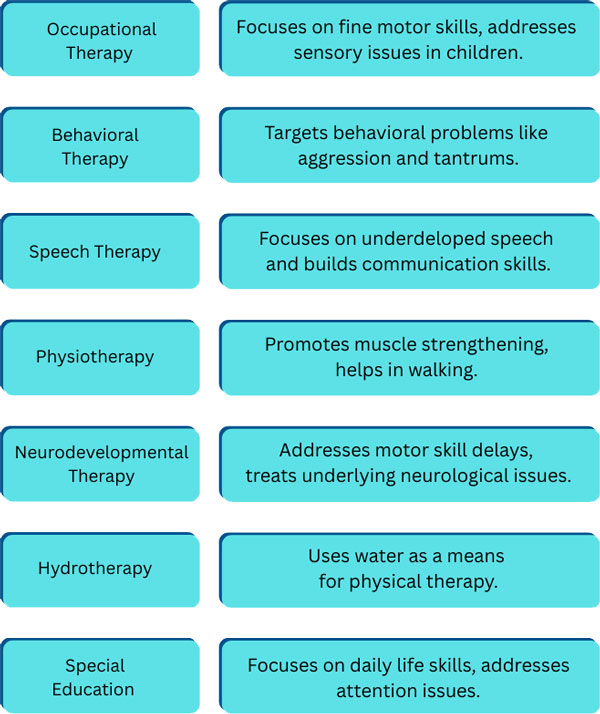
Occupational Therapy (OT)
Occupational therapy deals with the development of fine motor skills in children. Lots of children cannot make minor movements other children can. Occupational therapy also helps children, including hyperactive children, with sensory issues (sensitivity to specific things like noise or textures) to cope better with their surroundings.
Behavioral Therapy
As the name suggests, behavioral therapy addresses issues with a child’s behavior. If your child is displaying unfavorable behavior like hitting, biting, scratching, crying without tears, screaming, or urinating in places intentionally, then behavioral therapy is required.
Teenagers can also benefit from behavioral therapy (DBT) from a certified clinical psychologist, whereas a child psychologist usually works with children.
Speech Therapy
Speech therapy addresses speech problems in children. It helps children with underdeveloped speech. It focuses on building speech and communication, and treating swallowing disorders.
Speech therapy is beneficial for children with developmental delay, hyperactivity, and people suffering from brain injury. Children with developmental disorders like autism and cerebral palsy also benefit from speech therapy.
Physiotherapy
No one is a stranger to physiotherapy. It is used to help develop, maintain, or regain proper physical function. Physiotherapists use strategies based on a patient’s condition and age. It is used to regain movement after an injury, address chronic issues, and also treat sports-related injuries.
- NDT (neurodevelopmental therapy) is used for children and addresses motor skill delays and neurological impairments. NDT focuses on addressing underlying neurological issues, which in turn enhances functional movement.
- Hydrotherapy: Hydrotherapy uses water’s physical properties to improve muscle function. It is also a form of physiotherapy. Children having conditions like cerebral palsy, muscular dystrophy, autism, or down’s syndrome can benefit from hydrotherapy.
Special Education
Special education helps children practice skills that are required in their daily lives. A special educator ensures children develop their reading and writing skills. Hyperactive kids with attention issues also benefit from special education.
Heres's a quick summary of key therapy options:
You know your child best. However, feeling confused or having doubts is completely natural. If you are unsure, talk to your pediatrician or developmental expert. A small nudge in the right direction could mean a world of progress for your child.
Now that you know the kinds of therapy available for your child, let’s take a look at how a therapist figures out the correct therapy plan for your kid.
How Do Therapists Choose the Right Type of Therapy for Your Child?
Understanding your and your child’s concerns is of utmost importance in figuring out the correct therapy plan for them.
The process starts with an evaluation where a therapist meets you and your child to get a proper view of your kid’s situation. This includes speaking to you and your child together and separately to create an unbiased opinion.
How Do I Trust that Therapists Will Choose the Correct Therapy for My Child?
For ensuring a proper evaluation, your child’s therapist may focus on the following:
- Your child’s developmental and behavioral history
- Family dynamics and daily routine
- Social and interpersonal skills
- Diet and sleep patterns
After the evaluation, a developmental plan is created tailored to your child’s requirements. Your therapist will guide you in case your child requires any specialized assessments.
At Mango Town, we conduct all necessary assessments required for a child’s overall evaluation. We address issues by providing a proper goal-oriented therapy curriculum and guide parents on how to handle their child with specific issues.
Your Involvement in Your Child's Therapeutic Journey
How Can I Ensure My Child’s Therapy Success?
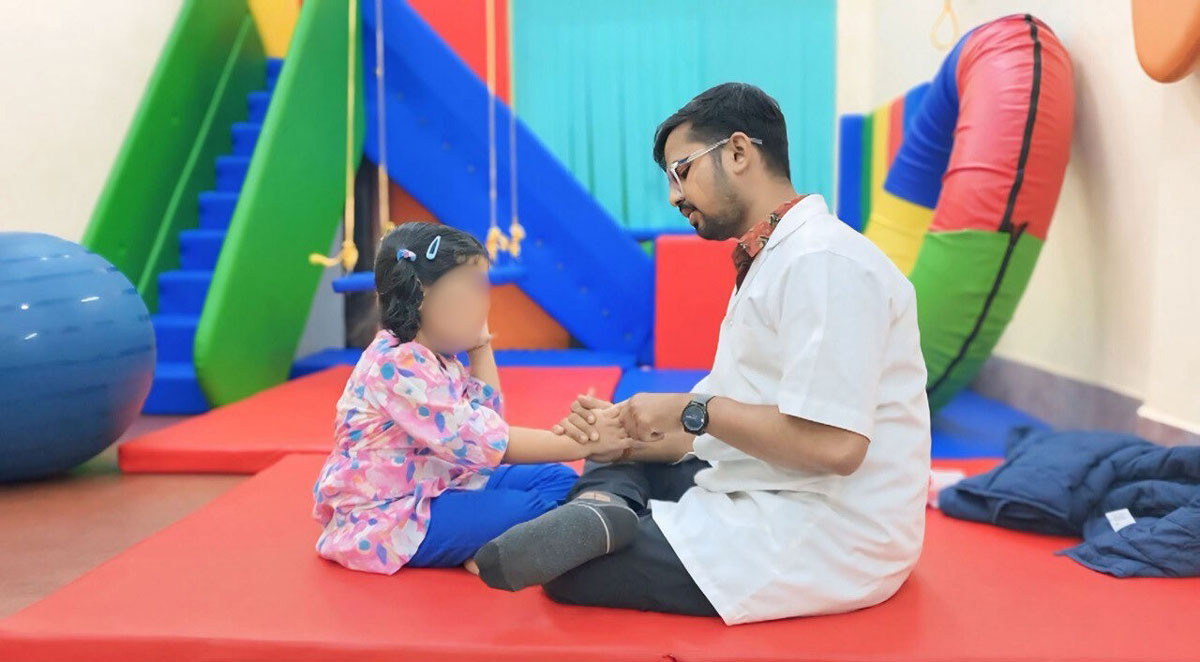
As a parent, it is of key importance that you are there for your child in every step of their therapeutic journey. Not only does your presence give them a sense of security, it also helps reinforce the techniques learned during sessions to support your child’s progress.
Build Trust: You need to trust your therapist to know and implement the best strategies for your child. Make sure you involve your child in the entire process, starting from research to selecting a therapist. Convey that nothing is wrong with them and therapy is only there as a means of growth and support.
Communicate: Communicating with your therapist and child on a regular basis will help you gain more insight into the entire process. Speak to your therapist if you have any concerns or just want to check up on your child’s progress real quick. Give your child opportunities to speak about their feelings about the therapy process and make sure to take them into consideration.
Be patient: Therapy is not an instant antidote; it takes time. From the very beginning you need to accept that your child’s growth will require time and patience. Remember that their development takes first priority, always.
Be Consistent: Take your child to their sessions regularly. A gap may cause them to lose their progress.
Celebrate Your Child: Don’t forget to praise your child for small achievements. You matter the most to your child. Your appreciation will help boost their confidence and motivate them to try harder.
We Are Here To Help
Here at Mango Town, not only do we have specialized therapy plans to address your child’s every need, but we also use internationally recognized equipment to support their journey. Our team of doctors and therapists works tirelessly to create unique approaches that will accelerate your child’s development.
Whether you are confused and want to speak to a specialist or want to directly learn about child therapy plans, we are here to speak with you anytime you want.