
What Happens In a Therapy Session? A Peek Inside Child Centered Approaches
As a parent who is just beginning their therapy journey with their child, it’s common to think, “What happens in a session, exactly?” It is natural for you to want a better understanding of the process your child will go through in their therapy sessions.
As a parent, it’s your right to know about the approaches taken when your child goes to therapy.
No therapist directly begins a session with a newcomer. There are certain ways to ensure a seamless integration not only for your child but also for you.
The Beginning— From Ice Cold to Playful
When a child comes out of a womb, they cry, right? You may choose to enroll your kid in a therapy center for various reasons. However, understand that coming to a therapy center means a change in environment for your child.
Your child may cry when they initially begin therapy. This is quite normal and usually lasts for a few days until they get familiar with their surroundings. This is why the initial interaction with their therapists is vital and will pave the way for future sessions.
How do our therapists handle their first interaction with a kid?
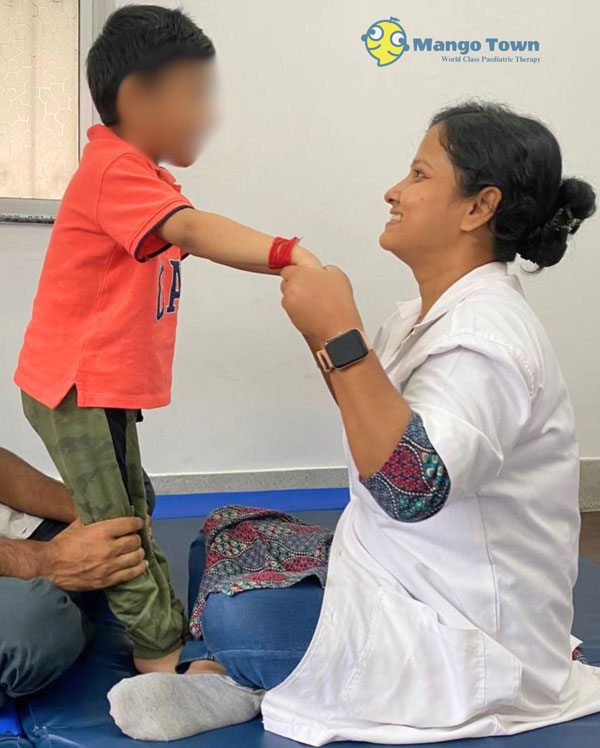
Your child could be two or five, but the approach to their first session will stay the same. The first day is when your kid properly meets their therapist and vice versa. In their first session, therapists will try to gauge the intake capacity of each child. Overwhelming a child with a structured approach from day one will only hinder their integration with the system.
Every therapist focuses on building a relationship with your child. Rapport building with your child will help them gain their trust and eventually follow instructions properly. It also makes your child understand that their therapy center is a safe space for them.
No one forces your child to perform in their first session. Whether your child is here for physical therapy or to develop their speech, the first session is all fun and games. It is a light introduction to more elaborate techniques that will be used in the upcoming sessions.
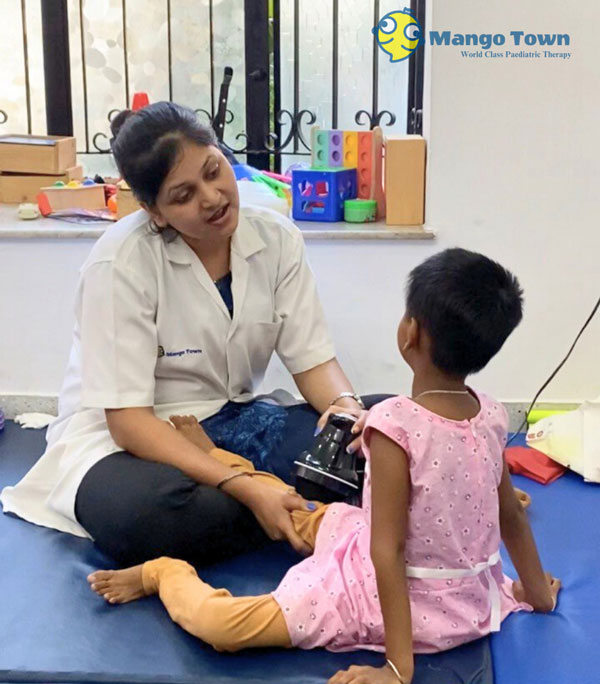
Remember that therapy takes time and patience – from both you and your child. Forcing your kid to make progress quickly will only hinder their growth.
To Play or Not to Play? It isn't even a question
Mango Town is never going to say NO to playing. I mean, think about it. Have you ever seen a child who is not interested in playing? At Mango Town, we use play-based therapy extensively. Through play, a child learns, solve problems, expresses emotions, and explores the world around them.
What kind of play do our therapists usually incorporate?
The level of play-based techniques is chosen after observing the child during the first few sessions and implementing them according to their developmental level.
- Structured Play: Therapists may use games that work on attention span, motor development and problem-solving skills.
- Free Play: Even though a structured curriculum is used for each session, children will be children after all. Giving them free rein of the space to play however they feel like is important.

Games are selected according to a kid’s thinking patterns, interests, and emotional responses.
- Building blocks and puzzles are used to build fine motor skills, frustration tolerance, and spatial reasoning. Activities like crawling through tunnels, jumping on a trampoline, or balancing on a structured ledge are used to develop gross motor coordination and body awareness.
- Children are also introduced to games during group therapy, where they learn how to build patience, social cues, and collaboration.
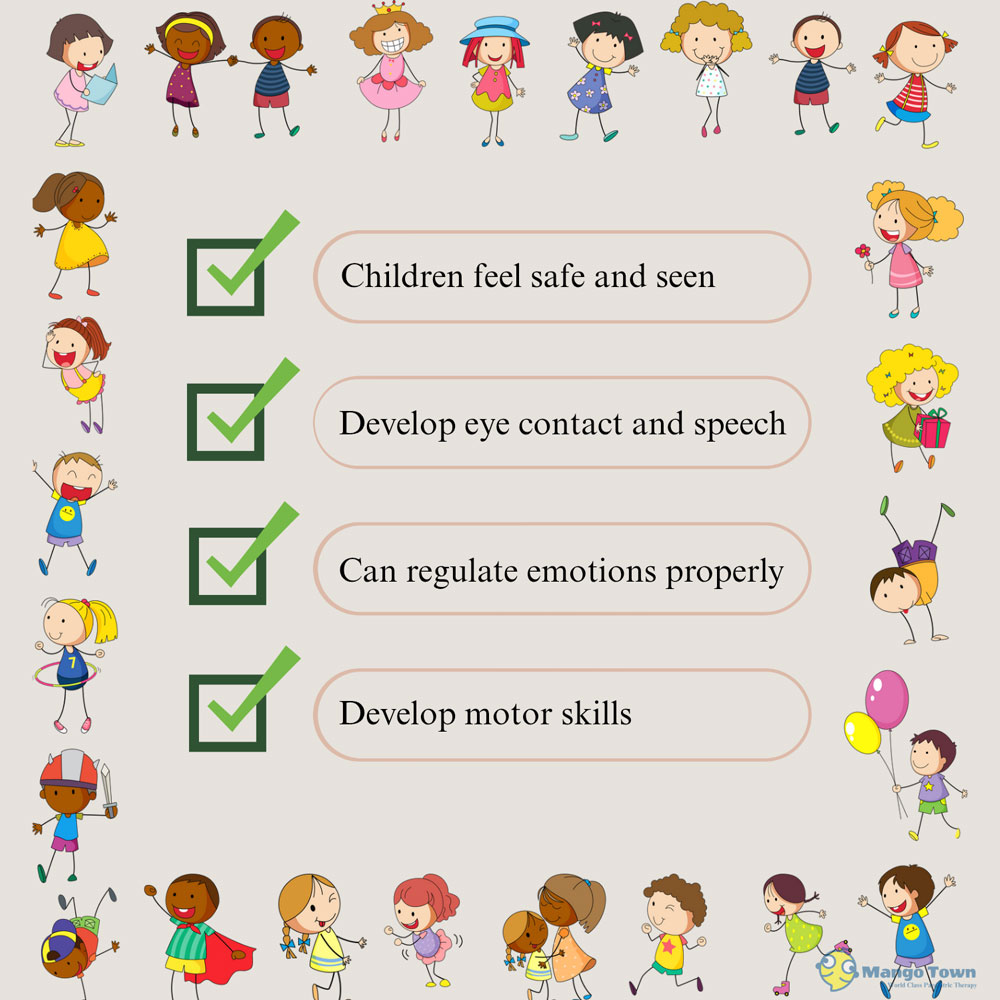
Even though your child’s therapy may often look just like playing, a lot of learning happens in each session.
The points below summarize the benefits of play therapy perfectly.
Goal Tracking - How to Understand Your Child's Progress
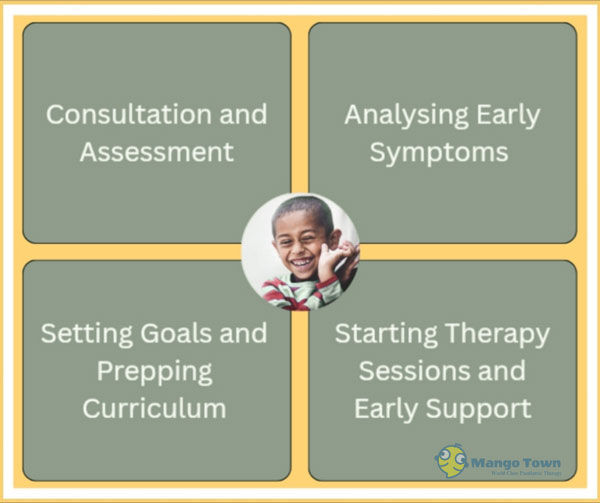
Your child’s sessions are set after analyzing the areas that need development. Based on where your kid requires support, a personalized curriculum is made. The curriculum includes areas of work, number of sessions, and types of therapies involved.
Say your child has developmental delay and needs to work on eye contact, fine motor skills, movement and coordination, and speech. The therapists will assign the number and duration of sessions according to the developmental goals set by them. A structured curriculum ensures proper progress tracking and optimal growth for your kid.
How do therapists ensure your kids' progress during sessions?
A therapist’s role in your child’s life is to guide and observe. A therapist is much like a teacher, instilling your kid’s brain with techniques and activities required for its development.
During your child’s therapy session, our therapists are always:
- Observing and noting your child’s progress
- Responding to their emotional needs through guided activities
- Introducing new activities to keep them engaged
- Encouraging them through reward-based activities
- Collaborating rather than just correcting them
At the end of the day, children are just little people who have a ton of unexplored potential in them. Don’t forget that they are also humans who require their own space and have their own limitations. A child may progress really quickly or at a slower pace—it’s all fine, as long as you have patience.
How Parents Get Involved In Sessions
It is normal for a child to look for their parents when they first start their sessions. After all, they were just handed over to a couple of strangers in an unknown room. How could they not be confused?
Parents’ involvement is welcome and necessary for their child’s growth and development. Here are a few ways parents could be involved in their child’s therapy journey:
- Involvement In-session: Based on a child’s temperament, only one of the guardians may be invited to sit with the child during the first few sessions. As your child makes progress and becomes accustomed to their sessions, parents can watch them from the surveillance area.
However, direct involvement of the parent during sessions might hinder them from developing independent social interactions. It is best to trust your child with your chosen therapist. - Involvement through Updates: Our therapists will give regular updates on your child’s progress and keep you informed on their behavior. You can also expect feedback and suggestions, which you can implement at home.
- Involvement through home plans: Parents can access the home plans created for their child’s progress at home. It’s important for you to follow the plan consistently to ensure that the set goals are achieved.
“Progress looks different for every child. Encouragement and celebrating micro-progress go a long way.”
Common Parent Questions Answered:
1. What if my child doesn't listen?
It’s completely normal for your child to not follow instructions and do their exercises properly in the early stages. They are kids, after all, and everything is new to them. It’s okay if they take a little time to get comfortable with their surroundings. It’s all a part of the process. Just treat them with kindness and patience, and they will quickly come around.
2. How long is each session?
Sessions are usually 45 minutes to an hour in length. However, it highly depends on the intake capacity of each child. It’s best to speak to your child’s therapist about this directly.
3. How long will therapy last for my child?
The total duration of therapy varies on case by case basis. A child with minor symptoms will require fewer sessions than a kid with a lot of developmental issues. That is why Mango Town insists on regular and consistent sessions for faster progress.
4. Can I switch to virtual therapy after some time?
Mango Town encourages busy parents to access virtual therapy sessions. However, it is vital that you have the necessary time and resources in your home to support your child’s developmental needs. Our therapists are ready to guide you virtually, at your convenient time. But please keep in mind that virtual therapy can only work when the child gets the right kind of assistance at home.
To know more about what kind of therapy your child needs or if at all your kid requires therapy, don’t hesitate to contact us. We are here to help!
Read our blogs on developmental milestones and how to choose the correct therapy for your child if you are confused and want to know more about therapy plans.