
Occupational Therapy vs. Physiotherapy in Children: What's the Difference?
It is natural to get confused between occupational therapy and physiotherapy when considering therapy options for your child. The two are often clubbed together for rehabilitative support, so it’s common to assume they are the same thing.
In this blog, we will give you a step-by-step breakdown of the two for your better understanding.
What is Occupational Therapy? (OT)
Occupational therapy involves equipping people (adults and children alike) with the skills needed to perform daily life activities. Active daily living (ADL) helps children develop independence over time and improve their quality of life.
How is Occupational Therapy Beneficial?
- Fine Motor Skills: Holding pencils, buttoning shirts, and tying shoelaces.
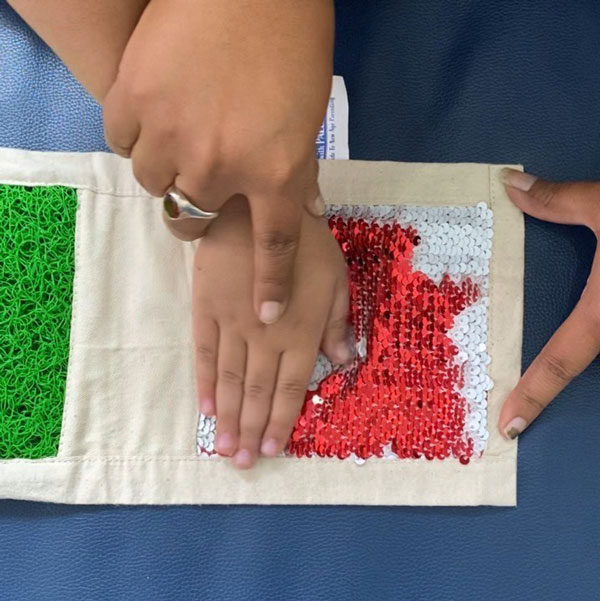
- Sensory Processing: Targeting over or under-sensitivity to sounds, textures, light, touch.
- Self-care: Eating with a spoon, brushing teeth, and using the toilet.
- Attention and Regulation: Helping kids focus, follow instructions, and regulate emotions.
Who Needs Occupational Therapy?
Children with:
- Autism Spectrum Disorder (ASD)
- ADHD
- Developmental Delays
- Cerebral Palsy
- Poor handwriting, clumsiness, and delays in independence
Occupational therapists use tools like sensory toys, therapy putty, weighted blankets, and obstacle courses. It’s a fun and playful way to integrate children with the skills they require to live to their fullest.
What is Physiotherapy? (PT)
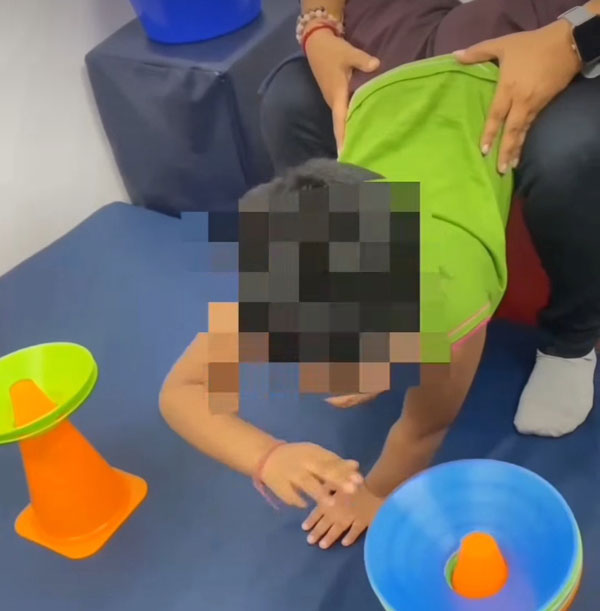
Physical therapy focuses on improving movement, strength, balance, and coordination. Physiotherapy is often used to address delays in important milestones like crawling, sitting, standing, walking, and running.
How is Physiotherapy Beneficial?
- Gross Motor Skills: Targeting muscles that help in walking, running, and jumping.
- Balance and Coordination: Improving movement control, preventing falls while walking or climbing.
3. Posture and Alignment: Correcting posture issues like toe-walking, slouching, and uneven sitting or standing positions.
Who Needs Physical Therapy?
Children with:
- Cerebral Palsy
- Motor delay
- Muscular Dystrophy
- Down Syndrome
- Orthopedic injuries
- Low muscle tone
Occupational Therapy Vs Physical Therapy
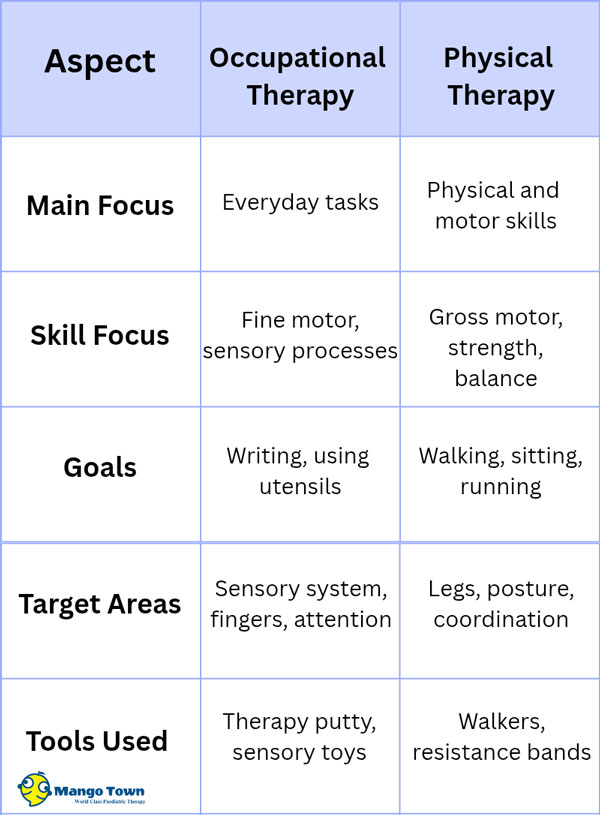
The chart below will give you a basic difference between the two.
When Does a Child Need Both OT and PT?
It is common to club occupational and physical therapy together to address issues in children. Both of the therapies together are commonly used when a child has multiple areas of development that require support.
In cases of Cerebral Palsy, Global Development Delay (GDD), Down’s Syndrome, Autism Spectrum Disorder (ASD), and traumatic brain injury, occupational and physical therapy are often clubbed together.
How Mango Town Can Help
At Mango Town, we have expert doctors and occupational therapy specialists who guide children every day through their therapy. From clearing parent doubts to specialized assessments, we do it all.
Whether you are confused and want to speak to a specialist or want to directly learn about therapy options, we are here to speak with you anytime you want.