
Is My Child Just Shy, or Is It Something More? Understanding Social Development
Parenthood is difficult no matter what stage you are at. Watching your child grow and develop in front of your eyes seems rewarding until you start overthinking it. Sometimes it could be hyperactivity, sometimes anger issues, sometimes speech delay, and sometimes social anxiety.
It is completely normal if you notice your child acting shy amongst his peers and persistently displaying shyness and quietness when in group settings. However, if you are concerned, this behavior can be addressed by keeping track of social milestones and taking appropriate measures.
What Does "Normal" Social Development Look Like?
Each child is unique and develops at their own pace. Social development can be heavily influenced by a child’s environment and daily interactions. Given below is a breakdown of what early social development typically looks like in children.
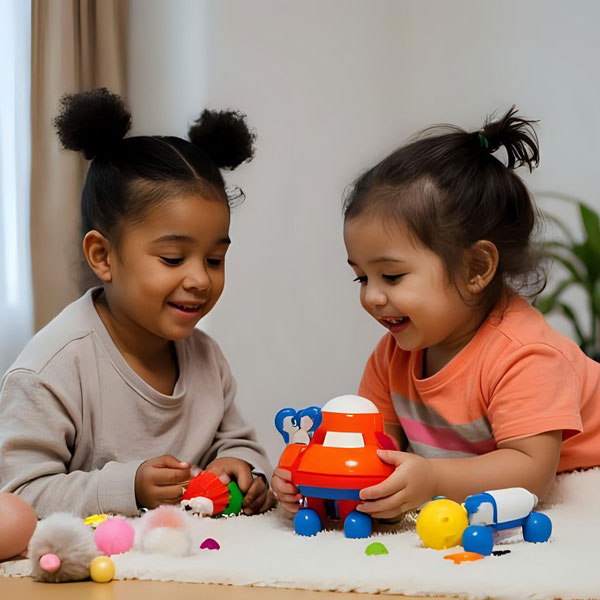
Ages 0 to 3 years: Early Interactions
🙋 Recognition and Emotion: Recognizing familiar faces and displaying emotions like frustration and affection.
🙋 Parallel Play: Playing alongside other kids. Having difficulty in sharing their toys.
🙋 Early Independence: Showing independence but also seeking care and attention. Displaying early signs of empathy by picking up on other people’s distress.
🙋 Pretend Play: Imitating adults, taking part in make-believe games.

Ages 3 to 5 years: Increased Socialization
🙋 Cooperative Play and Friendship: Actively playing with peers, sharing toys, and taking turns while playing.
🙋 Emotional Development: Displaying more sensitivity to others’s feelings and ability to identify emotions.
🙋 Role-playing: Understanding rules in a game and following them. Building characters with defined roles during pretend play.
🙋 Independence and Social Skills: Expressing needs, increased independence and gaining daily life skills.
Ages 6 to 8 years: Group Dynamics and Friendships
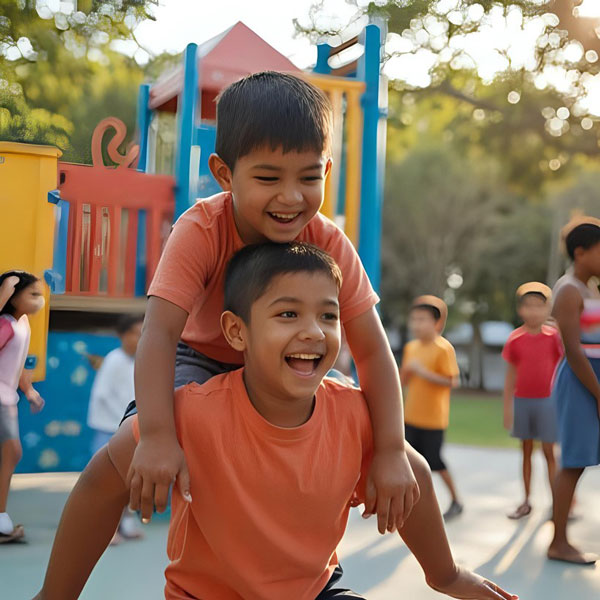
🙋 Deepened Friendships: Significance and importance of friendships increase, and they learn how to navigate complex social structures.
🙋 Teamwork: Greater understanding of rules, fairness, and teamwork.
🙋 Conflict Resolution: Resolving conflict with peers independently, and deeper understanding of feelings.
🙋 Responsibility: Understanding personal responsibility, consequences of actions, and displaying more independence from family.
Signs That Might Indicate a Deeper Challenge
Given below are observation points that you might benefit from keeping an eye on.
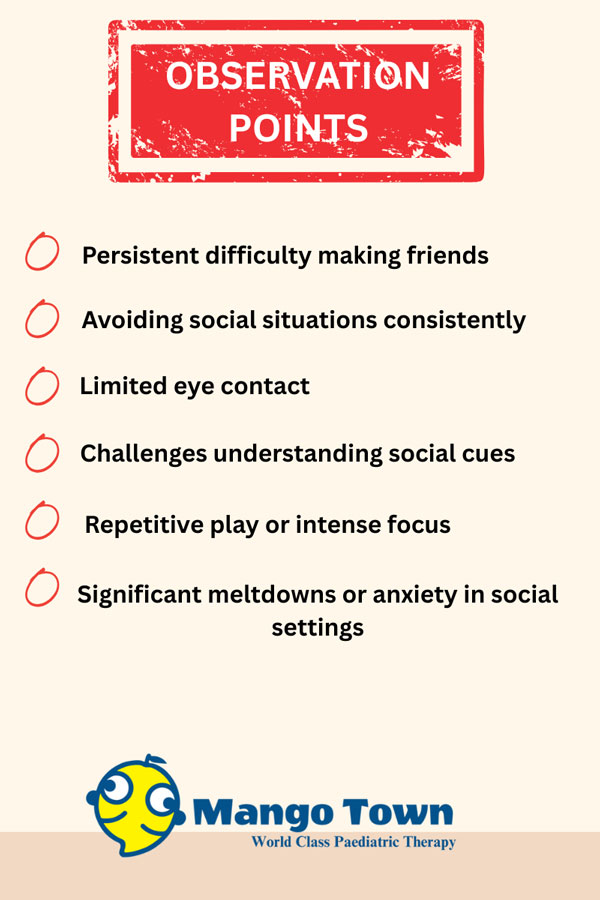
It is natural for your child to display some of these signs during their early development stages. However, persistent display of one or more signs should grant a consultation with your pediatrician.
When Should You Consider Professional Support?
Normal “social development” covers a broad range. As mentioned before, your child’s social progress may deviate slightly from typical milestones. Here’s what you need to keep in mind if you are confused:
- Trust your instincts: As a parent, you know your child best. If your gut tells you that something might be wrong, or you notice significant delays in multiple areas, it’s probably time for an expert opinion.
- Understand, don’t label: When confused, it is always advisable to seek a professional assessment. Professional assessments are not there to label your child. They provide you with a deeper understanding of your child’s strengths and possible areas where they might require support.
- Consult your pediatrician: Your pediatrician will be the best person to guide you through your child’s overall development, needed development strategies, and any applicable intervention programs.
How Therapy Can Help Unlock Social Potential:
At Mango Town, we work with plenty of children who face challenges in their social development. Through therapeutic approaches, we provide targeted support and help build skills and confidence in children who require it.
Behavior Therapy:
Behavior therapy is provided by child psychologists or behavior therapists. It focuses on understanding and modifying behavior to promote positive social interactions.
It helps to:
- Identify and label emotions.
- Understand causes and effects.
- Develop empathy.
- Develop appropriate social behaviours.
- Incorporate healthy coping mechanisms.
Specialists help develop positive coping techniques like breathing exercises and help regulate emotions with sensory tools. Behavioral therapy helps in developing social understanding through role-playing various social scenarios and social stories.
Speech Therapy:
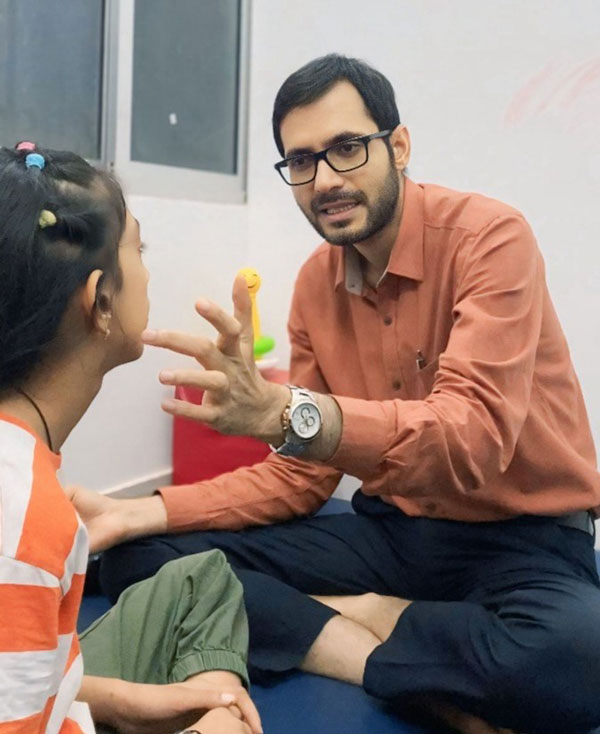
Speech therapy plays a critical role in social communication. It teaches children how to use language in social contexts.
It helps to:
- Initiate and maintain conversations.
- Take turns to speak during conversations.
- Maintain focus on a current topic.
- Ask for help or clarification.
- Understand nonverbal cues like expressions, body language, voice tone, and eye contact.
With proper speech therapy, children can learn the proper way to talk in social situations, differentiate between various emotions and actions in social settings, and develop confidence in their communication skills.
Group Therapy:
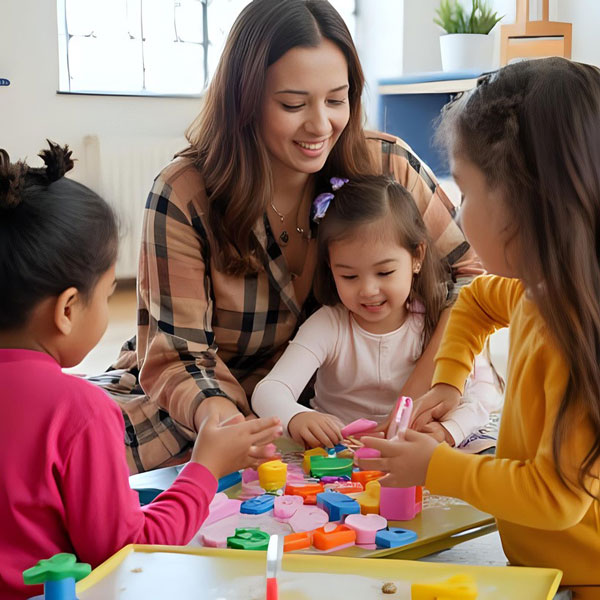
For toddlers, preschoolers, and early school-age children, group therapy can be a fun way to practice social development.
It helps to:
- Apply skills in a safe and controlled setting.
- Receive immediate feedback on their interactions.
- Observe and learn from peers.
- Develop natural interactions in group dynamics.
- Boost self-esteem and confidence in interacting with peers outside of therapy.
By combining these approaches, specialists in Mango Town create a guided support plan for children for their seamless integration in preschool and primary school level.
How You Can Encourage Social Skills at Home:
- Facilitate playdates.
- Read books about emotions and friendships.
- Model good social behavior.
- Encourage imaginative play.
- Practice turn-taking in games.
By consistently incorporating these strategies into daily life, you can give your child a powerful and nurturing environment for their social-emotional growth and development.
At Mango Town, we provide a solution to all child developmental issues. We address everything from speech to behavior to motor delay.
Whether you are confused and want to speak to a specialist or want to directly learn about child therapy plans, we are here to speak with you anytime you want.